Case study / 01
Business workflows, without the BPMN burden.
A form-first platform for modeling, publishing, executing, and monitoring business processes.
- Role
- Product & Software Architect
- Scope
- Backend architecture · Workflow model · Security · Product UX
- Status
- In development
- Year
- 2026

01 / CONTEXT
The problem
Make workflow automation accessible to nontechnical users while preserving deterministic execution, version integrity, tenant isolation, and contextual confidentiality.
02 / RESPONSE
The response
A modular monolith owns the canonical business model and authorization rules, while Flowable manages process and task execution. Dynamic assignment connects responsibilities to the organization structure.
03 / EXPERIENCE
Product flow
- 01
Design
Compose forms, steps, actors, and rules.
- 02
Validate
Check structure and assignment readiness.
- 03
Publish
Create an immutable executable version.
- 04
Execute
Route work through personalized worklists.
- 05
Audit
Trace business and security events.
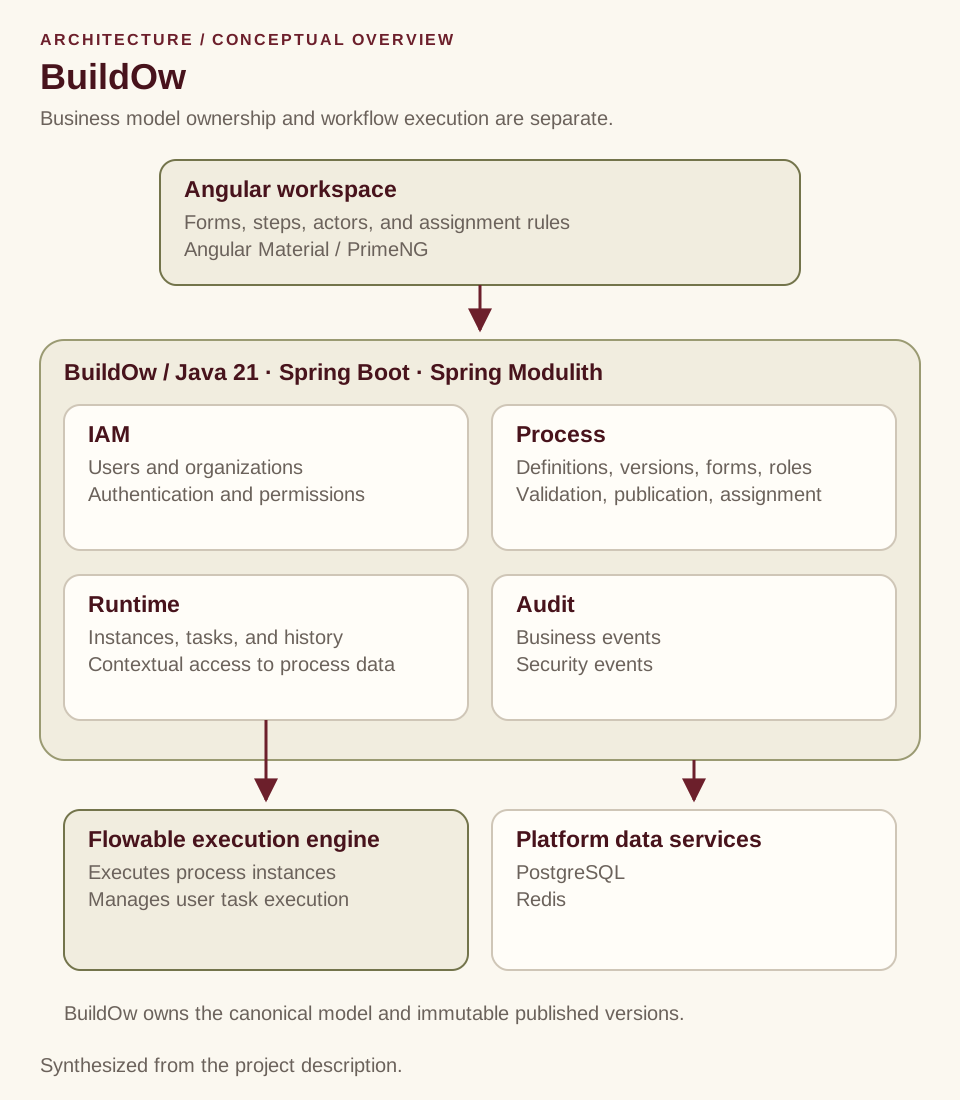
05 / SYSTEM
System architecture
Business ownership stays in BuildOw; Flowable is a replaceable execution capability.
06 / TRADE-OFFS
Architecture decisions
Modular monolith
Clear boundaries without premature distributed complexity.
Canonical model
The product stays independent from the engine representation.
Immutable publication
Instances keep the exact definition under which they started.
07 / QUALITY
Security & reliability
- Published workflow versions are immutable.
- Authorization uses organization and process context.
- Business and security events remain auditable.
08 / EVIDENCE
Outcomes & evidence
- A coherent domain model for workflows, forms, actors, and versions.
- A role-aware experience for designers and participants.
- An architecture able to evolve independently of Flowable.
09 / STACK