Case study / 03
Turn an agent idea into an engineering-ready blueprint.
A guided product that structures capabilities, data, permissions, risks, tests, and delivery work before implementation.
- Role
- Product Architect & AI Engineer
- Scope
- Product strategy · Generation workflow · Data contracts · Human review
- Status
- Working prototype
- Year
- 2026

01 / CONTEXT
The problem
Convert ambiguous agent requests into specifications teams can estimate, review, test, and secure.
02 / RESPONSE
The response
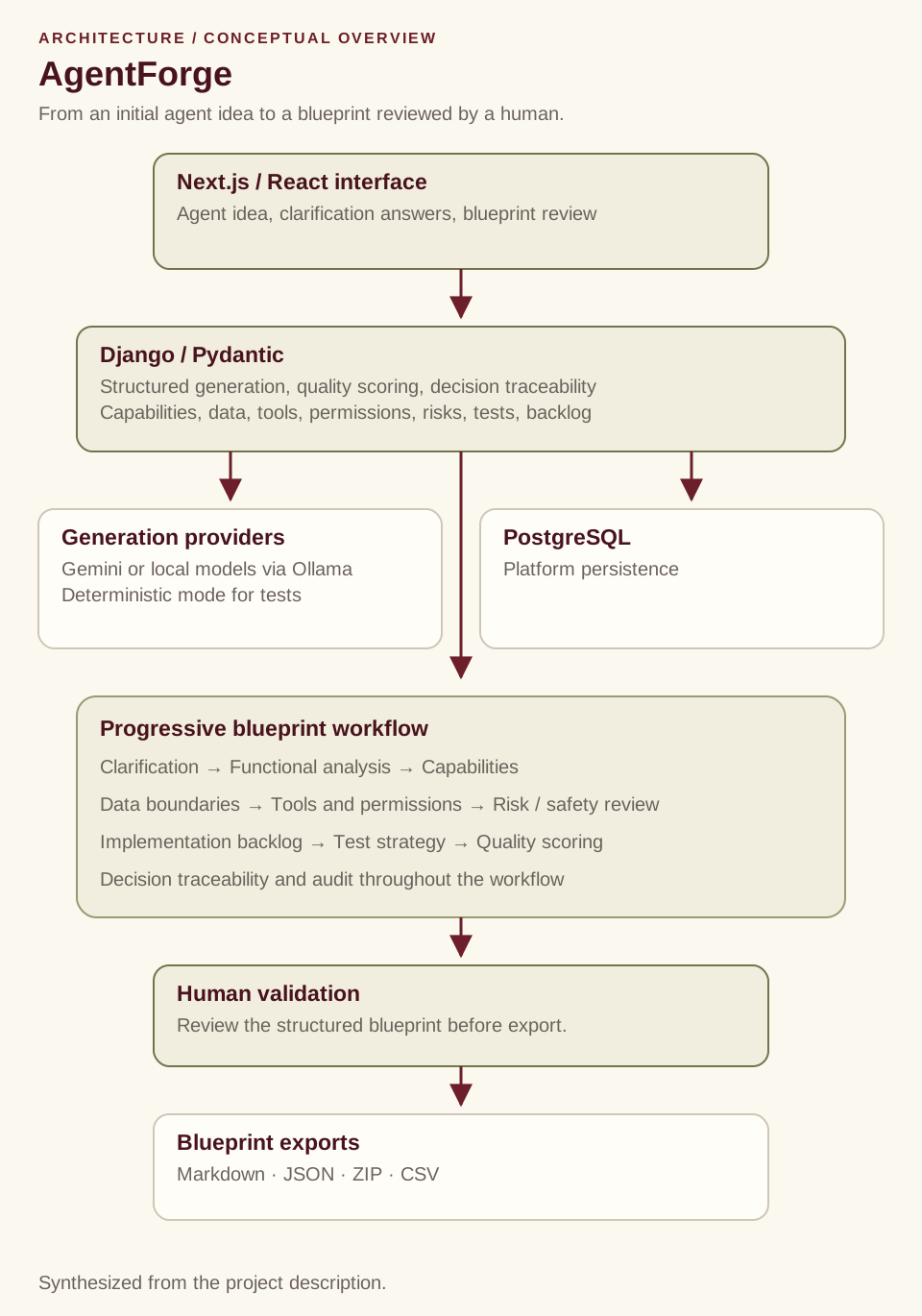
Progressive clarification feeds a typed Django and Pydantic pipeline. Provider abstraction, deterministic tests, and human review keep output inspectable.
03 / EXPERIENCE
Product flow
- 01
Describe
Capture the agent goal and context.
- 02
Clarify
Resolve actors, data, and boundaries.
- 03
Generate
Build a structured, scored blueprint.
- 04
Review
Validate decisions and unresolved risks.
- 05
Export
Hand engineering an actionable package.
04 / PRODUCT
Product evidence


05 / SYSTEM
System architecture
A typed blueprint is the contract between discovery, generation, review, and export.
06 / TRADE-OFFS
Architecture decisions
Structured generation
Pydantic contracts produce reviewable artifacts.
Provider abstraction
Cloud and local models share one boundary.
Human validation
Automation stops before engineering commitment.
07 / QUALITY
Security & reliability
- Deterministic mode makes generation testable.
- Quality scoring surfaces incomplete sections.
- Audit records preserve decisions.
08 / EVIDENCE
Outcomes & evidence
- A shared artifact connecting intent and delivery.
- Permissions and data boundaries become explicit early.
- Exports support planning, testing, and handoff.
09 / STACK